
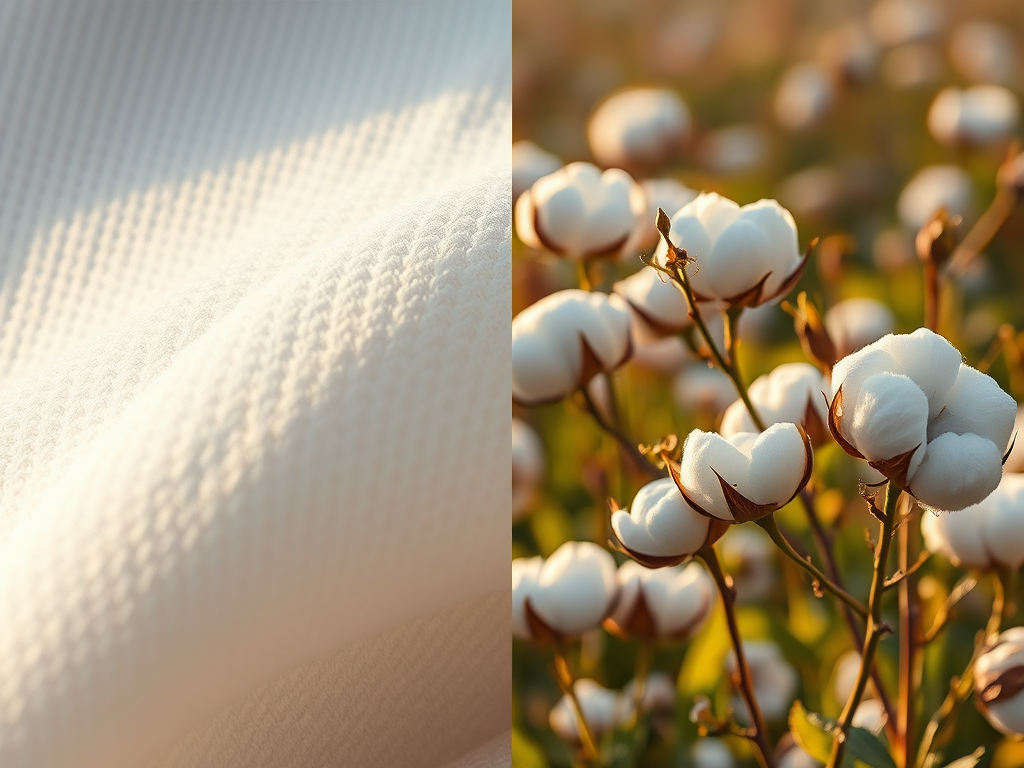
Lately, I’ve been standing in front of my closet, wondering why so many of my clothes feel… uncomfortable. It’s not the fit. It’s not the style. It’s the fabric. And after doing a ton of research (and listening to my skin), I’ve decided it’s time to get rid of the polyester in my wardrobe and make room for something that feels more aligned with who I am — cotton.
This post isn’t just about fashion. It’s about health, history, and listening to our bodies. If you’ve ever wondered about polyester vs cotton, especially if you have sensitive skin, this might help you rethink what you’re wearing too.
Polyester vs Cotton: What’s Really Touching Your Skin?
Polyester: The Synthetic Sneak

Let me start by saying this: I didn’t always pay attention to fabric labels. If the top looked cute and fit the budget, it went in the cart. But over time, I noticed something. My skin would sometimes itch. I’d feel stuffy, sweaty, or just plain irritated, especially during warm days or while working out. It felt like my clothes were working against me.
That’s when I started to dig deeper into polyester — and what I found was eye-opening!
Polyester is a synthetic fabric, basically plastic made from petroleum (the same stuff used to make plastic bottles and packaging). It doesn’t breathe well, traps sweat, and holds onto odors. For someone like me with sensitive skin, that’s a no-go.
According to recent studies, polyester fabrics can actually contribute to skin irritation because they trap heat and moisture, creating a perfect environment for bacteria to grow, especially in tight clothing. A 2022 study published in the Journal of Clinical and Aesthetic Dermatology even found that synthetic fabrics, especially polyester, may exacerbate conditions like eczema and contact dermatitis.
I realized: maybe it’s not my skincare routine that’s the problem. Maybe it’s my clothes.
Cotton: The Natural Comfort

The more I learned about cotton, the more I felt a connection to it, not just physically, but emotionally. Cotton is natural, soft, and breathable. It allows air to circulate and absorbs moisture, which helps keep the skin dry and calm.
But what really drew me in was the history.
Cotton has been around for thousands of years. Our ancestors grew it, harvested it, spun it by hand. It’s a plant — not a product. There’s something really beautiful about that.
Wearing cotton feels like a quiet rebellion against fast fashion and synthetic everything. It feels like I’m going back to the basics, back to something real. Maybe I’m doing too much, I don’t know, but it feels like I’m trying to live the way my ancestors did. Not in every way, of course, but in the ways that matter. In the way I nourish my body, the way I slow down, and yes, even in the way I dress.
Polyester vs Cotton: A Simple Breakdown
Let’s break it down in real terms, especially for anyone trying to figure out what’s better for their skin, health, and peace of mind.
| Feature | Polyester | Cotton |
| Breathability | Poor – traps heat and sweat | Excellent – allows air to flow |
| Feel on skin | Can feel rough, sticky, or itchy | Soft, gentle, ideal for sensitive skin |
| Moisture | Wicks moisture but holds odor | Absorbs moisture, dries naturally |
| Skin-friendliness | May cause irritation, especially with eczema | Hypoallergenic and soothing |
| Environmental impact | Made from plastic, non-biodegradable | Biodegradable and renewable |
| Cost | Usually cheaper | Often pricier, but worth it long-term |
| Durability | Long-lasting but can pill | Wears naturally but softens with time |
But What About Wrinkles and Shrinking?
I won’t lie, cotton takes a little more care. It wrinkles more easily and may shrink if you don’t wash it right. But honestly, I’ve started to love that. Those little imperfections remind me that it’s real. Just like me. Just like life.
Polyester, on the other hand, may keep its shape, but at what cost? It clings to the body, makes me sweat more, and doesn’t let my skin breathe. For me, it’s not worth it.
Recent Science Says: Natural is Better
It’s not just about how cotton feels. Recent research backs this up. A 2023 study in Dermatitis highlighted that cotton is significantly less likely to cause skin reactions compared to polyester or nylon. The researchers emphasized how important breathable, natural fibers are for individuals with sensitive or reactive skin.
Even dermatologists now recommend cotton underwear, bras, and sleepwear for people struggling with body acne or irritation. And I’ve noticed the difference myself. Since switching to cotton (especially at night), my skin has felt calmer, and I’ve had fewer flare-ups.
What About the Environment?

This part really hit home.
Polyester is plastic. Every time we wash it, tiny microplastics shed into the water system, and they never go away. Those particles end up in our rivers, oceans, and even in our food chain. In 2021, researchers from Science Advances estimated that over 14 million tons of microplastics have accumulated on ocean floors, much of it from synthetic clothing.
Cotton, when grown and harvested responsibly, doesn’t do that. It breaks down naturally and doesn’t leave a toxic trace behind.
I’m not perfect. I still have some polyester pieces in my closet. But I’ve started donating or upcycling them, and from now on, I’m only buying cotton (or other natural fibers like linen or hemp). It feels good to be intentional.
Making the Switch: My Tips for Going Cotton-Only
If you’re reading this and thinking, “Hmm, maybe I should try that,” here are a few things that helped me:
- Start small. Replace basics like t-shirts, underwear, or bedsheets with cotton versions first.
- Read labels. Some clothes say “cotton blend” but still have a lot of polyester. Look for 100% cotton when possible.
- Shop secondhand. Cotton clothes are easy to find at thrift stores, and it’s a more sustainable choice.
- Don’t stress. You don’t have to throw everything away overnight. Just be mindful going forward.
A Little Love Letter to My Skin
Switching to cotton has felt like a love letter to myself, and especially to my skin. I spent so many years trying to “fix” my skin with creams, masks, and routines, when sometimes all it really needed was something as simple as better fabric.
I don’t think I’m being dramatic when I say this change has made me feel more connected, to myself, to my body, and to the generations that came before me. Maybe I am doing too much, but I don’t care. This feels right. And in a world that’s always rushing and pushing synthetic everything, choosing cotton is my quiet way of saying: “I see you, ancestors. I’m listening.”
Final Thoughts: Polyester vs Cotton Is Bigger Than Fabric
This isn’t a trend. It’s a return. A return to the earth, to nature, and to what feels good and true. So if you’re debating polyester vs cotton, here’s my take: choose what feels kind. Kind to your skin. Kind to the planet. Kind to the version of yourself that’s trying to live a little more gently.
From now on, I’m team cotton, and I’m not looking back.
What about you, bestie?
Have you noticed how your clothes affect your skin or mood? Let me know in the comments. 💛
– Fifi




Leave a Reply to Fifi ☁️Cancel reply